







Key takeaways:
- Choosing a visible, accessible location for recycling stations significantly boosts community participation.
- Effective signage, using clear language and visuals, enhances understanding and encourages proper recycling habits.
- Community involvement is crucial; organizing events and partnerships can foster ownership and innovation in recycling efforts.
- Ongoing monitoring and maintenance, supported by community volunteers, sustain the station’s success and strengthen community ties.
Choosing the right location
Choosing the right location for a recycling station is crucial for maximizing participation. I remember the excitement of setting mine up in a local park. The foot traffic was amazing, and it felt rewarding to see people stopping by, tossing in bottles and cans.
Accessibility is key; you want to place your station where it’s easy for everyone to reach. When I first chose a spot, I considered how often I saw people walking by. What good is a recycling station if it’s tucked away behind bushes? I learned that visibility can significantly boost usage—making it a win-win for both the environment and the community.
Another factor to think about is the surrounding environment. I once put a recycling bin near a busy café, and you wouldn’t believe how much engagement I saw! It inspired me to consider not just foot traffic but the habits of people in the area. What are they likely to recycle, and where would they naturally dispose of items? Finding the perfect blend of community habits and strategic placement can make all the difference.
Gathering necessary materials
Gathering the right materials for your recycling station is a pivotal step in ensuring its success. When I set up mine, I remember feeling a sense of urgency to find the most effective supplies. It’s more than just bins; it’s about creating a space that encourages responsible recycling. I learned to think creatively and consider local resources that might support my efforts.
Here’s a quick list of what you’ll need to create a solid recycling station:
- Recycling bins: Different colors for various materials (plastic, glass, paper).
- Labels: Clear, easy-to-read signs to guide users on what goes where.
- Weatherproof coverings: To protect the station from the elements if it’s outdoors.
- Promotional materials: Flyers or posters to educate the public about recycling benefits.
- Support from local businesses: Sponsorships or partnerships can provide additional resources.
Every item plays a role in transforming a simple spot into a strong call for action. I’ve found that investing time in sourcing these materials not only enhances the station’s functionality but also fosters community pride. It’s like filling a toolbox—each piece is essential for building something impactful and lasting.
Designing the recycling station
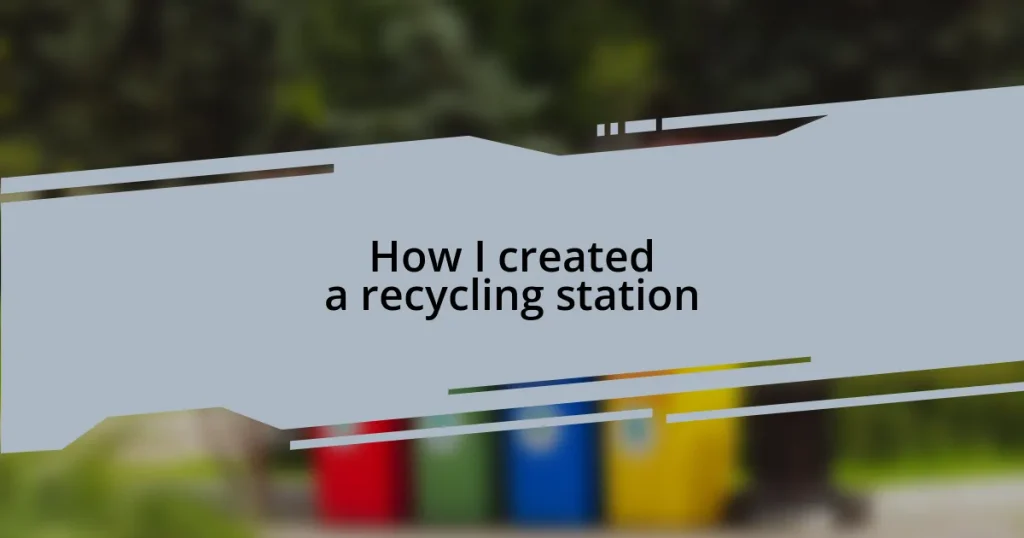
Designing a recycling station involves thoughtful planning and creativity. I vividly remember sketching out my ideas, envisioning how I wanted everything to look. It was exciting to think about not just functionality but also the aesthetics of the station. Colorful bins can draw people in, turning a mundane task into something visually appealing. I opted for vibrant hues, which not only differentiated the materials but also made the station stand out in the park. This choice turned out to be a game changer—people were more likely to engage when they saw something inviting.
In addition to visuals, the layout of the station matters greatly. When I first set mine up, I thought about how it would flow. I placed the bins in a semi-circle, encouraging easy access from multiple angles. It made the recycling process feel seamless. I even added a small bench nearby for those moments when people wanted to pause, reflect, or share their recycling stories. I found that a thoughtfully designed space can foster community discussion and education around recycling. Isn’t it beautiful when a recycling station becomes a little hub of environmental awareness?
Lastly, I’d recommend considering the signage carefully. I experienced firsthand how properly labeled stations can significantly impact usage. I remember creating clear signs that explained what could and couldn’t be recycled. Initially, I underestimated the power of that information. But once the signs were up, I noticed a marked improvement in the quality of what people brought to the station. It sparked curiosity, leading to questions, and ultimately increasing community involvement. It’s quite remarkable how the design of a station can inspire a deeper connection to the recycling process.
| Aspect | Consideration |
|---|---|
| Color Scheme | Use vibrant colors to make recycling bins eye-catching. |
| Layout | Create an inviting flow for easy access and community interaction. |
| Signage | Implement clear, informative signs to guide proper recycling. |
Implementing effective signage
Implementing effective signage is where I truly realized the importance of clear communication in my recycling station. I remember the day I installed those signs; there was a sense of anticipation in the air. What I discovered was that the right signage doesn’t just inform; it inspires action. I chose bold fonts and simple language, ensuring everyone could understand the recycling guidelines. This approach wasn’t merely aesthetic—it transformed the way people interacted with the station.
One memorable moment came when a young child approached with her mother, excitedly pointing at the signs. “Mom, look! We can’t put this in here!” she exclaimed, holding up a used food container. It was then I understood how effective signage could spark curiosity and spark a learning moment. I realized that when signs are engaging and visible, they empower the community to participate responsibly. It’s amazing how a few thoughtful words can lead to significant changes in behavior and mindset.
I also found it essential to include visuals alongside text, like illustrations of acceptable recyclables. After doing this, I noticed a distinct decline in contamination—those pesky non-recyclables sneaking in! Isn’t it fascinating how a single image can clear up confusion faster than words alone can? I felt a deep satisfaction seeing the impact of these minor adjustments, reinforcing my belief that investing time in signage truly paid off.
Encouraging community involvement
Encouraging community involvement became a key element in the success of my recycling station. I remember organizing a small neighborhood gathering to discuss sustainability and share my vision. Seeing neighbors nod in agreement and share their own ideas made me realize the importance of collective engagement. How can we inspire change without inviting others to join the conversation? It’s about creating a sense of ownership within the community.
To take it a step further, I partnered with local schools. We organized workshops where students could learn about recycling firsthand. One day, a group of enthusiastic kids even helped decorate our bins with artwork celebrating recycling. Their excitement was contagious! I found that involving children not only educated them but also encouraged families to participate in the effort. Wouldn’t you agree that kids can be the most passionate advocates for change?
Additionally, I initiated monthly clean-up events around the station. These get-togethers not only beautified our area but also fostered friendships among residents. I vividly recall the laughter and camaraderie as we picked up litter and shared stories. It was wonderful to see how a common goal could unite a diverse group of people. After these events, many approached me with fresh ideas for sustaining our recycling efforts. Isn’t it amazing how community involvement can spark innovation?
Monitoring and maintaining the station
Monitoring and maintaining my recycling station has proven to be a rewarding journey. Initially, I would make weekly visits to assess the condition of the bins and ensure they were not overflowing. On one of those routine checks, I distinctly remember the feeling of pride as I saw a steady flow of recyclables collected. It was gratifying to know that my efforts were paying off, but I also realized that consistent oversight was essential to prevent issues.
I learned the value of engaging community volunteers to help with maintenance. One Saturday morning, a couple of neighbors offered to lend a hand, and together we cleaned up around the station while sharing stories about our own recycling journeys. That day seeded a wonderful routine; we began to schedule monthly maintenance sessions that turned into social events. Wouldn’t it be great if everyone could experience the joy that comes from teamwork? This involvement not only kept the station tidy but also reinforced a sense of shared responsibility among us.
I found that keeping open lines of communication with my community was crucial. I created a simple feedback system where residents could leave notes or suggestions about the station. The notes varied from requests for more bins to ideas for future community events. One heartfelt message that stuck with me was from an elderly neighbor who expressed how he felt more connected to the community through our little recycling effort. It was moments like these that reminded me of the larger impact we could collectively achieve by monitoring and nurturing our recycling station.
Expanding recycling efforts further
Expanding our recycling efforts is something I genuinely believe can amplify the impact we’re making. I recently brainstormed with a local non-profit about launching a community challenge to boost recycling rates even further. Imagine the excitement of friendly competitions where neighborhoods could earn rewards for the most recyclables collected! The thought of fostering a little rivalry might just motivate families to go the extra mile.
To branch out even more, I started exploring partnerships with nearby businesses. One memorable conversation I had with a local coffee shop owner revealed their interest in reducing waste. Together, we crafted an initiative to encourage customers to bring reusable mugs in exchange for discounts. Connecting my recycling station with their business not only gave us a common goal but also turned patrons into champions of sustainability. Isn’t it incredible how collaboration can elevate our collective efforts?
I must admit, sometimes I find myself wondering about the untapped potential within our community. For instance, what if we could host a recycling fair to educate people about proper sorting techniques? I envision tents with fun, interactive activities, showcasing everything from composting to upcycling crafts. The idea of hands-on learning truly excites me; after all, knowledge is power, and the more we share, the stronger our recycling movement becomes.